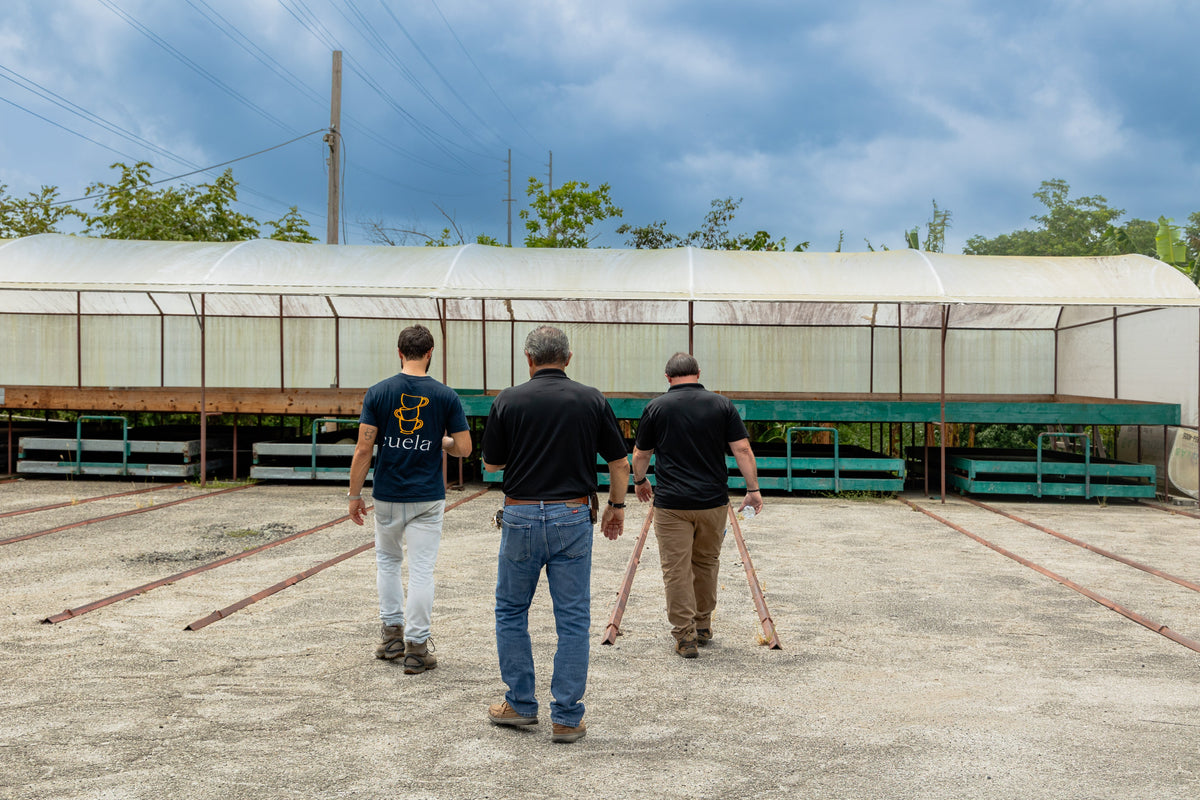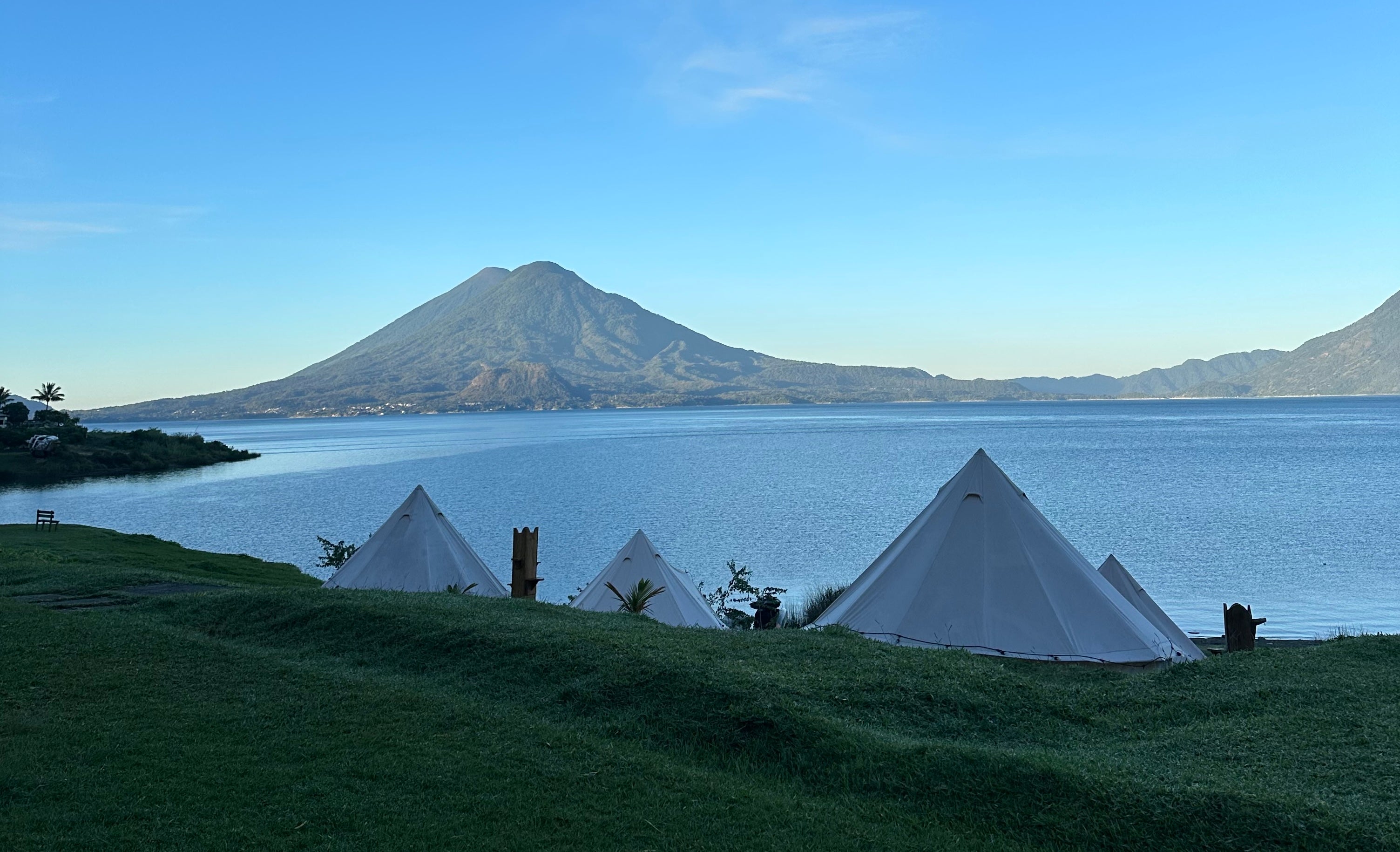

Puerto Rico sits within the Coffee Bean Belt, one of the fortunate stretches of land around the globe where coffee grows. Here, harvest begins as early as July at the lower elevations and runs through February in the highest zones.
At one point, coffee was grown across the entire island. However, certain areas produced the best quality: the mountainous region spanning Orocovis, Morovis, Ciales, Jayuya, Utuado, Adjuntas, Guayanilla, Yauco, Las Marías, Maricao, Ponce, Mayagüez, Juana Díaz, Villalba, Lares and San Sebastián. These are the towns that have kept producing coffee to this day.
In towns like Las Marías and Mayagüez, and in parts of Maricao, Lares and San Sebastián, the elevation is low (700 to 800 feet above sea level), so harvest begins in August. Elevation isn't the only factor, though. I have witnessed coffee being harvested at Finca Samara in Adjuntas at around 2,000 feet. It all depends on the microclimate, or how much direct sun a farm gets, which speeds up the ripening of the coffee cherry. Adjuntas, Utuado and Ciales reach peak harvest in September.

Towns with coffee zones at higher elevations, such as Jayuya, Yauco, Guayanilla and Juana Díaz, start harvesting in late September, and picking can continue through February. Several years ago, we picked coffee at Hacienda Masini in Barrio Rubias, Yauco, and in February the bushes were still full of ripe red cherries. The same happens in the Gripiñas sector of Jayuya. These areas sit much higher, so their harvest starts much later.
At higher elevations, coffee takes longer to ripen because of the cooler temperatures. This benefits the cherry: the mild climate slows ripening, letting it concentrate more sugars and produce a better cup. That doesn't mean high-altitude coffee is always superior to low-altitude coffee, but it does give it a few points of advantage. Still, if we incorporate agroforestry into lower-elevation farms, we can regulate the temperature of the coffee plot and improve ripening conditions, adding more sweetness to the cup.
Here's a fun fact: although Puerto Rico doesn't have the altitudes of Peru, Colombia, Guatemala and other countries, we benefit from our distance from the equator. We don't need as much elevation to achieve the complexity and quality of coffees grown closer to the equator.

Climate change has moved the harvest up by a month or two. This year's drought, while it has spared us from hurricanes, is also a problem: coffee cherries need water to ripen well, so we don't expect a high-quality harvest. You might think an earlier harvest is a good thing because you can pick more, but that's not the case. When a fruit like coffee ripens early under heat stress, the cherry doesn't accumulate enough sugars to make a quality cup. That's why more producers are adopting agroforestry and considering Robusta on a larger scale. It's a much hardier species with higher yields and better resistance to diseases like leaf rust (roya).
For all of this and more, the coffee industry is an incredibly romantic one. Nothing worth loving comes without challenges, and coffee is no exception. Coffee is part of our culture as Puerto Ricans, and all of us who love it know it becomes a non-negotiable daily ritual. Let's keep enjoying our industry, challenges and all.