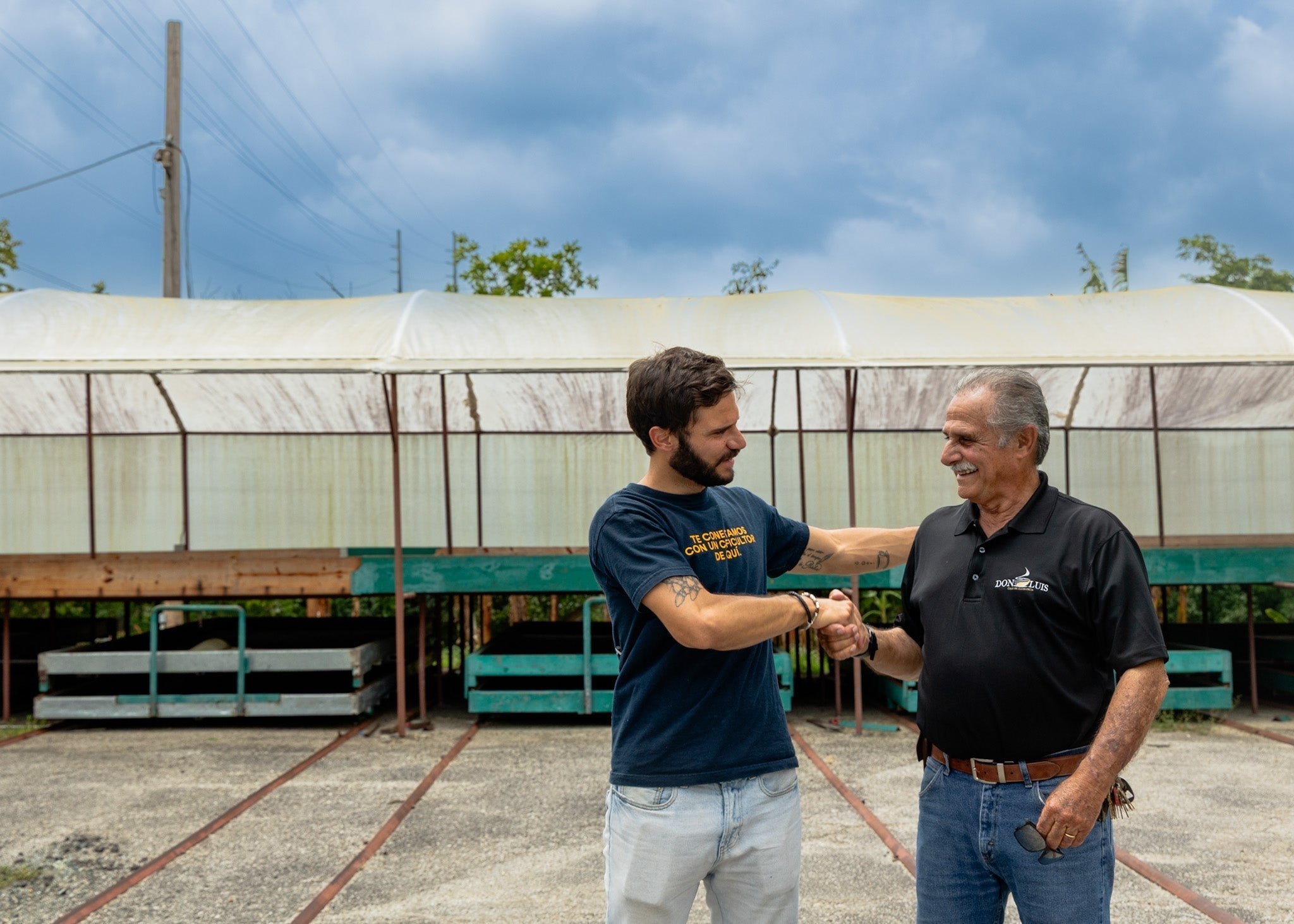

This blog aims to explain coffee roasting as simply as possible, which is why we traveled to Ciales to interview Pedro José Maldonado, Master Roaster of Café Don Pello. To understand roasting, we can say it's quite similar to cooking. The Master Roaster buys raw coffee (Green Coffee) with a moisture content of 10% to 12%, and to transform it into a soluble product, the coffee undergoes a thermal shock of heat. Similar to cooking, right? For meat to be edible and to avoid any stomacache, it must be cooked, and in the cooking process, we achieve either tender and juicy meat or hard and dry meat. It all depends on personal preference.

Coffee goes through several critical points during roasting. The first is dehydration. Here, the coffee loses all its water and begins to change color from green to golden. Then the Maillard reaction begins, in which it turns golden. The third critical point is the first "crack," in which it releases all the air and makes a small "pop." After this, the flavor development stage begins. It's important to measure the time from the first crack to the final roast because this is where you can experiment and create different profiles to highlight the coffee's flavors. To be a good roaster, you have to understand that coffee is a living thing, and its attributes vary depending on its origin. In the case of Puerto Rico, the coffee is sweet with low acidity, medium body, and a chocolatey aftertaste. The roaster must be clear about these attributes because their job is to bring these characteristics to their fullest expression.
To understand roasting, we spoke with Pedro José, a fourth-generation roaster at Café Don Pello. PJ, as he's nicknamed, told us about the importance of roasting. “If I had to describe what roasting coffee is to me in one word, it would be an experience. Every day you learn something new roasting coffee. Roasting coffee is a physical and chemical process in which we seek to create a soluble product by developing the coffee's sugars, flavors, and aromas. Our focus is on bringing the coffee to its optimal point so that the barista or coffee lover at home can have the most consistent cup possible.” On the other hand, there are different roast levels, such as light, medium, and dark. Light roasts tend to be more veggie and are used for cupping or pour over methods. Secondly there is the medium roast that we recommend the most because the coffee's flavors and aromas are best expressed. Finally, dark roasts tend to have much more caramelized flavors and can even taste burnt to some extent. Not the best roast but there is a big group of people that love this kind of flavor.
 Cooking and roasting have their similarities, and for the best flavors to emerge, nothing should be too raw or too burnt. The medium level is the best in both disciplines. Pedro José is very aware of this, and that's why in each roast he seeks to honor the entire coffee chain. The coffee farmer has the responsibility to produce ripe coffee and process it in a way that gives the roaster an optimal product to develop the best flavors and aromas.
Want Café Don Pello? Clicke here