
This blog is about honoring the Robusta. That's what it's all about.
The Robusta coffee variety has long been labeled a low-quality coffee due to its bitter and earthy flavors. However, unlike Arabica, this variety contains around 1.5% more caffeine and is highly resistant to pests and climate change. This resilience comes from the fact that Robusta has been developing for approximately 100,000 years — a longevity that has allowed it to build a natural defense against both environmental threats and disease.
The countries that produce the most Robusta in the world are Brazil, Uganda, India, and Vietnam. As an interesting note, due to climate change, the Arabica species is becoming increasingly difficult to produce, which is why the Specialty Coffee Industry is now looking at developing the Robusta species into a coffee worthy of being called special. This effort is still in its early stages, but several countries are already working on it.
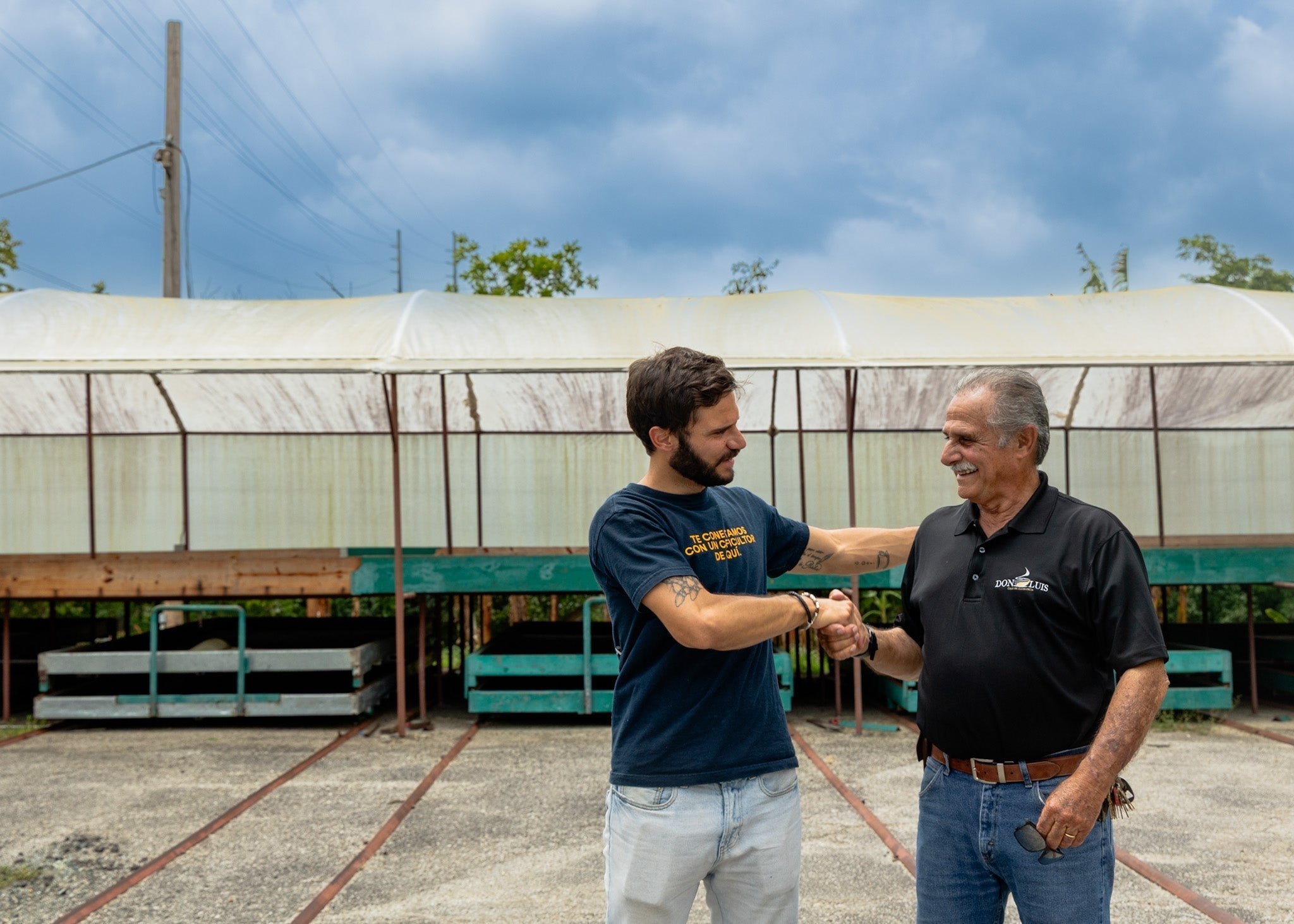
In the town of San Sebastián del Pepino in Puerto Rico, there is a coffee grower named Jimmy González who has never stopped looking at the Robusta variety with great passion. When you talk with Jimmy, the first thing you notice is the deep love he has for coffee — and that same feeling comes through in every harvest, every processing step, and every roast. It's no coincidence that Jimmy has a deep affinity for Robusta. San Sebastián sits at a low elevation, making it an environment where this variety naturally thrives.

Jimmy is a methodical person who is constantly searching for innovative ways and tools to improve the quality of his Robusta. In fact, he was the first producer who ever talked to us about honey processing and controlled fermentation applied to this variety. González is well aware that the sweetness and complexity of Robusta is not the same as Arabica, which is why through controlled fermentations he works to highlight and elevate those flavors. It will never be the same as an Arabica — but without a doubt, he manages to work wonders, and the results are remarkable in every cup.
After everything Jimmy shared with us over the years, we decided to visit his farm to see his Robusta plots firsthand and learn how he works his coffee. The first and most important step is harvesting at peak ripeness. Robusta does not contain as many sugars as Arabica, so the selection of each cherry must be even more precise. From there, the coffee goes through a honey process with controlled fermentation. This means the mucilage is left on the bean — and worth noting, Robusta produces significantly less mucilage than Arabica. To compensate, the controlled fermentation is used to draw out and amplify the sweetness.
The final step is to let the coffee ferment for several days and then dry it in the sun. During this stage, the coffee requires constant attention — especially on the first day, when it must be turned every two hours to prevent over-fermentation. Once it reaches 11% humidity, it is ready to be roasted.
This is where the magic of flavor development begins. It is critical to be precise and avoid over-roasting, because the goal is to preserve the attributes of sweetness, acidity, and bitterness — and that balance is achieved through a medium roast.

Jimmy has always been clear about his mission with Robusta, and it is simple: take something ordinary and make it extraordinary. That is a powerful life lesson. Each one of us can achieve what we set out to do. It all comes down to mindset and the time and work you are willing to invest in becoming better. There is no reason Robusta should be considered low quality when there are growers like Jimmy who go above and beyond in their obsession with excellence.
Historically, Robusta has been harvested in large volumes with very little quality control. Jimmy simply decided to stop and pull out the best possible version of that variety. Papamín's Honey Robusta transformed from a simple, everyday coffee into a clean, high-quality cup — a direct result of the work and dedication put into every single bean.
Thanks to Jimmy, today we can enjoy a 100% Puerto Rican Robusta coffee, Honey Process, right here at Cuela.
Visit cuela.coffee today and enjoy Café Papamín Robusta — Honey Process